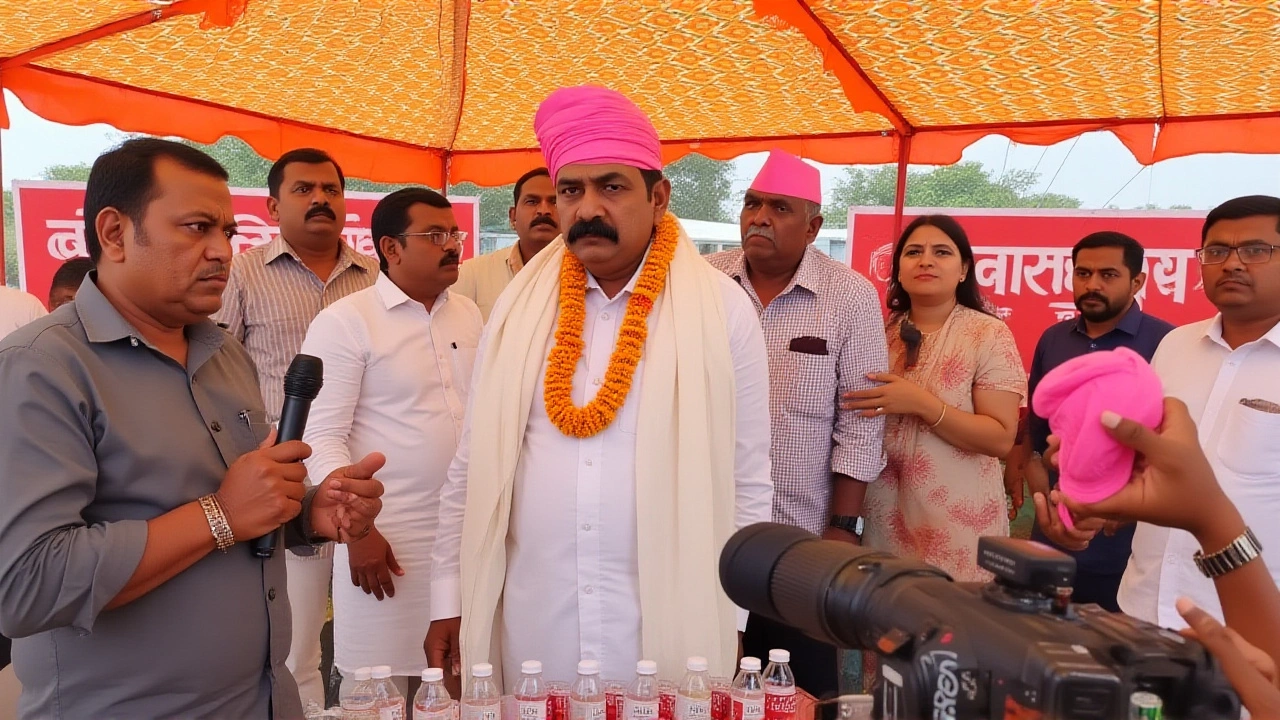
In the bustling market of Ghasi Pokhara, located in the Utraula constituency of Balrampur district, a political gathering took place that signals more than just local campaigning. Leaders and workers of the Samajwadi Party (SP) recently convened a "PDA Panchayat," a grassroots initiative aimed at consolidating support for the upcoming 2027 Uttar Pradesh Assembly Elections. The central pledge? To make party president Akhilesh Yadav the Chief Minister of Uttar Pradesh.
Here’s the thing: this isn’t an isolated event. It’s part of a broader, systematic strategy unfolding across the state. Led by SP State Secretary Shatrohan Prasad Verma, the meeting in Sadullah Nagar area brought together former district panchayat members, ex-district secretaries, and local activists. They weren't just shaking hands; they were drawing up battle plans for 2026 and 2027.
The PDA Strategy Explained
So, what exactly is a "PDA Panchayat"? If you’re not familiar with the acronym, it stands for Pichda, Dalit, aur Alpsankhyak — the Backward, Dalit, and Minority communities. These groups form the core voter base for the Samajwadi Party. The idea is to hold village-level or ward-level meetings where party workers explain their ideology, address grievances, and mobilize voters specifically from these demographics.
During the Balrampur event, Shatrohan Prasad Verma explained that these PDA Panchayats are being organized in every ward of every panchayat under each assembly constituency, following direct instructions from Akhilesh Yadav. The goal is twofold: educate the public about what the party calls the "lies" of the current government and assert the rights of marginalized sections.
Former District Panchayat Member Mohammad Talib and former SP District Secretary Mohammad Abrar Khan played key roles in briefing attendees. They didn't just talk politics; they discussed policy impacts, particularly how outsourcing in government jobs might affect reservation benefits for these communities. It’s a nuanced argument, trying to link economic policy directly to social justice.
Why This Matters Now
Turns out, timing is everything. With the 2026 Panchayat elections approaching and the 2027 Assembly polls looming, the SP is shifting gears. After securing record victories in the 2024 Lok Sabha elections largely on the strength of this same coalition, the party is doubling down on its identity politics.
Analysts suggest that the SP views the PDA coalition as its primary political engine. By organizing these localized "Panchayats" (councils), they aim to create a feedback loop between ground-level issues and state-level leadership. It’s less about top-down messaging and more about bottom-up mobilization.
Verma emphasized that the current administration’s policies are eroding reservation systems and promoting religious polarization. In contrast, the SP presents its PDA philosophy as an alternative based on caste arithmetic and social equity. As one attendee noted, the atmosphere was charged with a sense of urgency — people want to see tangible results before the next vote.
Key Figures and Local Impact
The presence of seasoned leaders like Mohammad Talib and Mohammad Abrar Khan adds weight to the campaign. These aren't newcomers; they understand the local dynamics of Balrampur and surrounding areas. Their participation signals that the party is serious about retaining its traditional strongholds while expanding its reach.
Other notable attendees included Deepak Verma, Abbas, Mustaque, Ghanshyam, Chiddu Yadav, and Kashiram Yadav. While their names might not be household words statewide, they represent the grassroots network that makes or breaks elections in rural Uttar Pradesh. Their role is crucial: translating high-party rhetoric into local action.
This approach mirrors similar initiatives seen elsewhere in the state, where SP offices have hosted large-scale PDA gatherings featuring supporters carrying symbolic sticks (dandas) and chanting slogans. The visual imagery reinforces unity and strength among diverse community groups.
Looking Ahead: 2026 and Beyond
The stakes are high. The 2026 Panchayat elections will serve as a litmus test for the SP’s organizational health. If they can replicate their 2024 success here, it bodes well for 2027. But if they falter, it could expose weaknesses in their rural connect.
Experts point out that while the PDA coalition has proven effective, it also faces challenges. Maintaining cohesion among such diverse groups requires constant engagement. Any perceived slight or policy misstep could fracture this alliance. That’s why these continuous dialogues — the PDA Panchayats — are so critical. They keep the conversation alive and the base engaged.
As we move closer to 2026, watch for more of these localized events popping up across Uttar Pradesh. They’re small in scale but significant in scope. For Akhilesh Yadav and his team, winning hearts and minds in places like Ghasi Pokhara is just the beginning of a much larger journey toward Lucknow.
Frequently Asked Questions
What does PDA stand for in the context of the Samajwadi Party?
PDA stands for Pichda, Dalit, aur Alpsankhyak, which translates to Backward, Dalit, and Minority communities. This coalition represents the core voter base for the Samajwadi Party, focusing on social justice and reservation rights for these groups.
Who led the recent PDA Panchayat in Balrampur?
The event was led by Samajwadi Party State Secretary Shatrohan Prasad Verma. He was joined by prominent local figures including former District Panchayat Member Mohammad Talib and former SP District Secretary Mohammad Abrar Khan.
When are the next major elections in Uttar Pradesh?
The next major elections are the Panchayat elections scheduled for 2026, followed by the Uttar Pradesh Assembly Elections in 2027. The SP is currently building momentum for both through these grassroots initiatives.
What is the main criticism against the current government raised at these meetings?
Critics argue that the current government’s policies, particularly regarding outsourcing in public sector jobs, threaten reservation benefits for backward, Dalit, and minority communities. They also accuse the administration of promoting religious polarization over social equity.
How widespread are these PDA Panchayats?
According to party officials, these Panchayats are being organized systematically in every ward of every panchayat under each assembly constituency across Uttar Pradesh, making them a statewide grassroots mobilization effort.